E10 Fuel


I have a question, now that E10 fuel is being supplied and my 1999 XJ8 3.2L Jaguar is shown as being compatible, when I SORN the car in possibly December for 6 months, should I run the fuel down and fill with E5 petrol before I SORN it or add an additive?
Re: E10 Fuel
Hi Doug, if your fuel system is generally in good condition, then you should have minimal problems. As always, the advice ahead of SORN is to either brim the tank and thereby reduce the air gap at the top of the tank, or alternatively have the absolute minimum of fuel in the tank at the point of lay-up. Personally, I go with the brimmed tank each time. Do remember though that the 10% ethanol will have a tendency to gather at the bottom of the tank and will have a slightly increased tendency to gather moisture, which would likely be in the fuel system in any event.
Jim
Jim
Jim Mann
Banchory
Banchory
-
PeterDavisX300
- Posts:287
- Joined:Wed Aug 19, 2015 10:17 am
Re: E10 Fuel
The last thing I'd want to do is step on any toes. However, in my opinion I firstly wouldn't be using E10 fuel in any car before 2011. Also modern fuels shelf life is less than Three months. In your position I'd make sure my last while of using the car I was putting Shell V Power in it or Esso Synergy, (in the latter preferably the blue label because it has zero ethanol) I'd mix in a small amount of premium Two-Stroke oil (like Silkolene, it smells exactly like Redex, and does the same job, i.e. upper cylinder lubricant) In the last couple of tanks of fuel, for every litre, 1ml. (so, for 50 litres of V-Power, put in 50ml of premium Two-Stroke) When storing the car I'd make sure there was a minimum amount of fuel in the tank. If you are going to start the car now and then, get a half gallon of fresh V-Power (with mixed-in Two-Stroke) and put it in and then start the car. If not starting for six months, (which I would advise against) then before starting put in a good few gallons of fresh fuel, and shake the car about a bit to mix it in. I would also loosen the fuel cap under the flap if the car sits out in sunlight, but close the cap tight before starting to re-pressure the venting system. Just as an aside, I have a few old cars and motorcycles, I work on them all, doing all servicing, welding, maintenance. I use Silkolene in all my pre 1998 cars, and all my Bikes including my modern 'V'-Twin, all the time, and one can tell easily when you take a cylinder head off that an upper cylinder lubricant has been used.
Just my opinion. Hope that helps.
Just my opinion. Hope that helps.
1984 Mercedes 450SL Rag-Top
Re: E10 Fuel
It's a personal choice....
The E10 issue is being discussed on a number of the JEC Model Forums. I'm sure others may disagree, but for me, there's a very simple logic in determining whether you decide to put E10 fuel in your car.
Please do feel free to disagree with any of the following and give us your views!
1. Is E10 beneficial for your engine, fuel tank, fuel lines and other components?
NO. It doesn't make your car run better and it doesn't benefit any of the individual fuel or engine components. Views?
2. Is there ANY chance that E10 can be detrimental to your engine, fuel tank, fuel lines and other components?
YES. It will theoretically cause the engine to run leaner. It can facilitate corrosion of fuel tanks etc through its inherent nature for water absorption, and it can damage ageing fuel lines.
3. Why does E10 exist?
It has been created to effectively dilute the volume of fossil fuel that we use, and thus benefit the environment.
4. Do you agree with that approach?
That's a controversial and different debate! We could talk about the potential need for massive deforestation, planting and harvesting of huge amounts of non-food crops to provide the base material for ethanol that is required to support E10 production, but I would be leading the witness! Do your own research and make up your own mind!
5. Do you HAVE to put E10 petrol in your car?
NO. You can use an "E5" higher octane petrol. And some of the "E5" fuels actually have zero ethanol (Esso Synergy Supreme). And you'll be running with a higher octane rating which often has other beneficial additives. Yes, it costs more, but the concept of fuel pricing and how it may influence both your choice of car and the mileage you cover is a different issue.
I will not put E10 fuel in my XJSs or my Range Rover, whilst there is an alternative.
As I said at the beginning, it's a personal choice!
Paul
The E10 issue is being discussed on a number of the JEC Model Forums. I'm sure others may disagree, but for me, there's a very simple logic in determining whether you decide to put E10 fuel in your car.
Please do feel free to disagree with any of the following and give us your views!
1. Is E10 beneficial for your engine, fuel tank, fuel lines and other components?
NO. It doesn't make your car run better and it doesn't benefit any of the individual fuel or engine components. Views?
2. Is there ANY chance that E10 can be detrimental to your engine, fuel tank, fuel lines and other components?
YES. It will theoretically cause the engine to run leaner. It can facilitate corrosion of fuel tanks etc through its inherent nature for water absorption, and it can damage ageing fuel lines.
3. Why does E10 exist?
It has been created to effectively dilute the volume of fossil fuel that we use, and thus benefit the environment.
4. Do you agree with that approach?
That's a controversial and different debate! We could talk about the potential need for massive deforestation, planting and harvesting of huge amounts of non-food crops to provide the base material for ethanol that is required to support E10 production, but I would be leading the witness! Do your own research and make up your own mind!
5. Do you HAVE to put E10 petrol in your car?
NO. You can use an "E5" higher octane petrol. And some of the "E5" fuels actually have zero ethanol (Esso Synergy Supreme). And you'll be running with a higher octane rating which often has other beneficial additives. Yes, it costs more, but the concept of fuel pricing and how it may influence both your choice of car and the mileage you cover is a different issue.
I will not put E10 fuel in my XJSs or my Range Rover, whilst there is an alternative.
As I said at the beginning, it's a personal choice!
Paul
1995 XJS 4.0 Convertible
1980 XJ-S Pre-HE
Jaguar 4.2 Supercharged engine (but not with a Jaguar body..)
1980 XJ-S Pre-HE
Jaguar 4.2 Supercharged engine (but not with a Jaguar body..)
-
PeterDavisX300
- Posts:287
- Joined:Wed Aug 19, 2015 10:17 am
Re: E10 Fuel
Hi Paul
Good view. I totally concur. I wonder how many people that enjoy older cars really look at the issues surrounding ownership, and see if they can align those issues with current environmental issues and forced government legislation. I particularly wonder how many people that enjoy these cars look into your paragraph 4!
Regards
Peter
Good view. I totally concur. I wonder how many people that enjoy older cars really look at the issues surrounding ownership, and see if they can align those issues with current environmental issues and forced government legislation. I particularly wonder how many people that enjoy these cars look into your paragraph 4!
Regards
Peter
1984 Mercedes 450SL Rag-Top
Re: E10 Fuel
Hi Peter,
I agree that this should be part of a much broader consideration by all of us as classic car owners.
There's a lot of debate about whether a particular Jaguar engine was endorsed by Jaguar, when new, as being capable of running on E10 fuel, as opposed to the more appropriate questions of:
- What are the reasons why I might wish to use it or not use it?
- Do I have to use it?
It would be interesting to know what decisions JEC members have made, and importantly why.
Paul
I agree that this should be part of a much broader consideration by all of us as classic car owners.
There's a lot of debate about whether a particular Jaguar engine was endorsed by Jaguar, when new, as being capable of running on E10 fuel, as opposed to the more appropriate questions of:
- What are the reasons why I might wish to use it or not use it?
- Do I have to use it?
It would be interesting to know what decisions JEC members have made, and importantly why.
Paul
1995 XJS 4.0 Convertible
1980 XJ-S Pre-HE
Jaguar 4.2 Supercharged engine (but not with a Jaguar body..)
1980 XJ-S Pre-HE
Jaguar 4.2 Supercharged engine (but not with a Jaguar body..)
Re: E10 Fuel
Hi All,
Having followed several E10 debates, and PODCASTs, from JEC, I feel the issue falls into two positions.
1. If one uses the car for a significant mileage, then avoid E10 in your classic. In preference use the ESSO supreme 99 but be aware, as from the recent JEC podcast that ESSO only distribute ethanol free fuel from their southern refinery. The ditribution only goes north to the Birmingham depot. Local distribution does not guarentee ethanol free from all ESSO forcourts.
Alternativley, get all hoses and seals in the fuel path replaced with ethanol capable products. Even E5 will eventually harm hoses etc.
I also base this opinion on work I have done on two stroke garden tools where the diaphram in the carbs have been destroyed
by the ethanol. Professionals are using an ethanol free product called Aspen which is over £20 for 5 litres.
2. Most Classic cars apparently do less than 2000 miles a year so most of the possible damage is done whilst laid up.
This seems to be mainly due to the hydroscopic properties causing corrosion. Still worth changing the hoses etc to avoid any fire risk.
The extra cost of "super" fuel is relatively insignificant to the cost of owning a classic so why use the ethanol fuels? If one runs low, a top up to get one to a low or free of ethanol forecourt is not going to hurt.
I found it interesting to hear during the recent podcast that the sales ratio of E5 to Supreme at ESSO is 30:1. This is the reason that not all forecourts have the "super" grade available.
The discussion regarding leaving the tank full or empty when laid up is interesting.
Fuel has additives which are seasonal and geographical. As already stated, shelf life is considered to be 3 months.
So filling up late autumn will mean that the first 200 plus miles in spring will be done on out of date fuel with the incorrect additives.
Leaving the tank empty means a higher risk of corrosion and subsquent debris in the fuel lines.
There's always a counter argument.
E10 is not forward progress for the classic owner but the issue of hose and seal degredation does need careful monitoring as it is a safety factor.
Having followed several E10 debates, and PODCASTs, from JEC, I feel the issue falls into two positions.
1. If one uses the car for a significant mileage, then avoid E10 in your classic. In preference use the ESSO supreme 99 but be aware, as from the recent JEC podcast that ESSO only distribute ethanol free fuel from their southern refinery. The ditribution only goes north to the Birmingham depot. Local distribution does not guarentee ethanol free from all ESSO forcourts.
Alternativley, get all hoses and seals in the fuel path replaced with ethanol capable products. Even E5 will eventually harm hoses etc.
I also base this opinion on work I have done on two stroke garden tools where the diaphram in the carbs have been destroyed
by the ethanol. Professionals are using an ethanol free product called Aspen which is over £20 for 5 litres.
2. Most Classic cars apparently do less than 2000 miles a year so most of the possible damage is done whilst laid up.
This seems to be mainly due to the hydroscopic properties causing corrosion. Still worth changing the hoses etc to avoid any fire risk.
The extra cost of "super" fuel is relatively insignificant to the cost of owning a classic so why use the ethanol fuels? If one runs low, a top up to get one to a low or free of ethanol forecourt is not going to hurt.
I found it interesting to hear during the recent podcast that the sales ratio of E5 to Supreme at ESSO is 30:1. This is the reason that not all forecourts have the "super" grade available.
The discussion regarding leaving the tank full or empty when laid up is interesting.
Fuel has additives which are seasonal and geographical. As already stated, shelf life is considered to be 3 months.
So filling up late autumn will mean that the first 200 plus miles in spring will be done on out of date fuel with the incorrect additives.
Leaving the tank empty means a higher risk of corrosion and subsquent debris in the fuel lines.
There's always a counter argument.
E10 is not forward progress for the classic owner but the issue of hose and seal degredation does need careful monitoring as it is a safety factor.
-
PeterDavisX300
- Posts:287
- Joined:Wed Aug 19, 2015 10:17 am
Re: E10 Fuel
Good Post.Hi All,
Having followed several E10 debates, and PODCASTs, from JEC, I feel the issue falls into two positions.
1. If one uses the car for a significant mileage, then avoid E10 in your classic. In preference use the ESSO supreme 99 but be aware, as from the recent JEC podcast that ESSO only distribute ethanol free fuel from their southern refinery. The ditribution only goes north to the Birmingham depot. Local distribution does not guarentee ethanol free from all ESSO forcourts.
Alternativley, get all hoses and seals in the fuel path replaced with ethanol capable products. Even E5 will eventually harm hoses etc.
I also base this opinion on work I have done on two stroke garden tools where the diaphram in the carbs have been destroyed
by the ethanol. Professionals are using an ethanol free product called Aspen which is over £20 for 5 litres.
2. Most Classic cars apparently do less than 2000 miles a year so most of the possible damage is done whilst laid up.
This seems to be mainly due to the hydroscopic properties causing corrosion. Still worth changing the hoses etc to avoid any fire risk.
The extra cost of "super" fuel is relatively insignificant to the cost of owning a classic so why use the ethanol fuels? If one runs low, a top up to get one to a low or free of ethanol forecourt is not going to hurt.
I found it interesting to hear during the recent podcast that the sales ratio of E5 to Supreme at ESSO is 30:1. This is the reason that not all forecourts have the "super" grade available.
The discussion regarding leaving the tank full or empty when laid up is interesting.
Fuel has additives which are seasonal and geographical. As already stated, shelf life is considered to be 3 months.
So filling up late autumn will mean that the first 200 plus miles in spring will be done on out of date fuel with the incorrect additives.
Leaving the tank empty means a higher risk of corrosion and subsquent debris in the fuel lines.
There's always a counter argument.
E10 is not forward progress for the classic owner but the issue of hose and seal degredation does need careful monitoring as it is a safety factor.
1984 Mercedes 450SL Rag-Top
Re: E10 Fuel
Some really good info here.
We have to be mindful of our political big brother dictatorship tactics and pandering here.
There’s no benefit to watering down our petrol with imported bio ethanol. In fact it probably wastes and costs more to do it, and that’s why you don’t see any price difference, and caused a complete mess up and fuel shortage when introduced, because refineries didn’t run out. The drivers we had a week earlier didn’t all of a sudden disappear. It was all a bit too suspicious..
If I look in the manual it says my 2001 XJR is compatible with E10. However I never have used it.
I only use shell super (v-power) or Esso 99.
Ethanol is a hideous solvent. It corrodes expensive to-replace items like fuel lines, injectors and tanks, and creates horrible sludge in them if not used. absorbs moisture from air and from the fuel supply.
Fuel containing ethanol also reduces drivability and increases fuel consumption. The lower the octane the hotter petrol will like to burn and the earlier it will likely erratically try and combust, or pre ignite.
Unfortunately leaded isn’t available but adding tetra ethyl lead to it was to reduce pinking and protect the valve seats from erosion by the otherwise hotter inefficient way the petrol would have burnt. That’s why it wouldn’t have been economic to run a quality car on 2 star it would run erratically and lead to damage due to poor quality.
Back to basics, high performance cars always were recommended 4 or 5 star. There’s a reason.
The higher the octane in fuel reduces pinking, vapour locking. it also leads to increased performance by allowing the mixture to be compressed more. Better efficiency therefore for high compression engines.
“Premium unleaded 95” isn’t really premium at all. It’s the old 3 star (blend).
2 star was 91, 4star was 97-99 octane and 5 star was 100-105.
If you add 10% ethyl to the 95 I cannot see that it will still be 95 as ethyl’s fuel content efficiency is 30% less than petrol. That means it tries to burn hotter and you’ll obviously get less MPG.
So yes , super grade is more expensive but, it’s more efficient, protects the entire system more, due to more added detergents and gives more MPG. Therefore a Jaguar being such special car needs the better fuel.
BTW keep a bottle of castrol E10 protector in the glovebox in case you get stuck and cannot find 4 star.
Winter lay ups - strongly recommend filling tank with super branded petrol 4 star and adding a fuel protector available from Castrol and others. Start every month or so to get things flowing and avoid starter solenoid from jamming solid through damp and corrosion, and tanks and lines from condensation.
We have to be mindful of our political big brother dictatorship tactics and pandering here.
There’s no benefit to watering down our petrol with imported bio ethanol. In fact it probably wastes and costs more to do it, and that’s why you don’t see any price difference, and caused a complete mess up and fuel shortage when introduced, because refineries didn’t run out. The drivers we had a week earlier didn’t all of a sudden disappear. It was all a bit too suspicious..
If I look in the manual it says my 2001 XJR is compatible with E10. However I never have used it.
I only use shell super (v-power) or Esso 99.
Ethanol is a hideous solvent. It corrodes expensive to-replace items like fuel lines, injectors and tanks, and creates horrible sludge in them if not used. absorbs moisture from air and from the fuel supply.
Fuel containing ethanol also reduces drivability and increases fuel consumption. The lower the octane the hotter petrol will like to burn and the earlier it will likely erratically try and combust, or pre ignite.
Unfortunately leaded isn’t available but adding tetra ethyl lead to it was to reduce pinking and protect the valve seats from erosion by the otherwise hotter inefficient way the petrol would have burnt. That’s why it wouldn’t have been economic to run a quality car on 2 star it would run erratically and lead to damage due to poor quality.
Back to basics, high performance cars always were recommended 4 or 5 star. There’s a reason.
The higher the octane in fuel reduces pinking, vapour locking. it also leads to increased performance by allowing the mixture to be compressed more. Better efficiency therefore for high compression engines.
“Premium unleaded 95” isn’t really premium at all. It’s the old 3 star (blend).
2 star was 91, 4star was 97-99 octane and 5 star was 100-105.
If you add 10% ethyl to the 95 I cannot see that it will still be 95 as ethyl’s fuel content efficiency is 30% less than petrol. That means it tries to burn hotter and you’ll obviously get less MPG.
So yes , super grade is more expensive but, it’s more efficient, protects the entire system more, due to more added detergents and gives more MPG. Therefore a Jaguar being such special car needs the better fuel.
BTW keep a bottle of castrol E10 protector in the glovebox in case you get stuck and cannot find 4 star.
Winter lay ups - strongly recommend filling tank with super branded petrol 4 star and adding a fuel protector available from Castrol and others. Start every month or so to get things flowing and avoid starter solenoid from jamming solid through damp and corrosion, and tanks and lines from condensation.
Cheers
Stu
Jaguar XJR 4.0SC 2001
Jaguar F-Type 3.0S sc 380 2014
Ford Sierra XR4x4 2.9i 1992
Ford Capri Cosworth 2.9i 1985
Stu
Jaguar XJR 4.0SC 2001
Jaguar F-Type 3.0S sc 380 2014
Ford Sierra XR4x4 2.9i 1992
Ford Capri Cosworth 2.9i 1985
Re: E10 Fuel
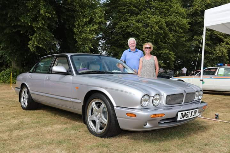
I only ever use ESSO Synergy Supreme+ 99 fuel in my Jags. 0% ethynol. Unfortunately it's not available in all parts of the UK. I have laid up the XJR for the winter with the tank filled to the brim.
https://www.esso.co.uk/en-gb/fuels/petrol
https://www.esso.co.uk/en-gb/fuels/petrol
X-308 Model Section Coordinator
2001 X-308 XJR
1996 X-300 XJ Sport
2001 X-308 XJR
1996 X-300 XJ Sport
Who is online
Users browsing this forum: No registered users and 4 guests